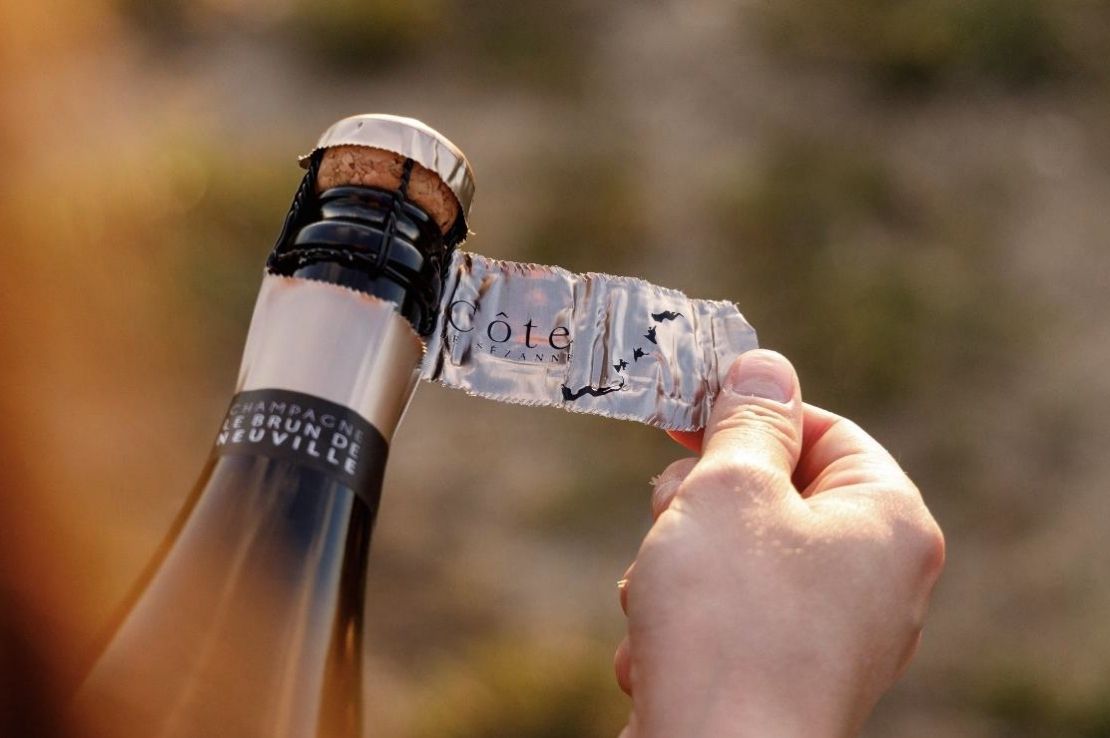
Champagne Le Brun de Neuville (a cooperative and Champagne house) brought six cellar-driven Côte de Sézanne (Champgne sub-region and brand name) to the Singapore industry and media as an introduction to the market.
The objective was to showcase the brand’s motto: tracing the terroir, human intervention and time.
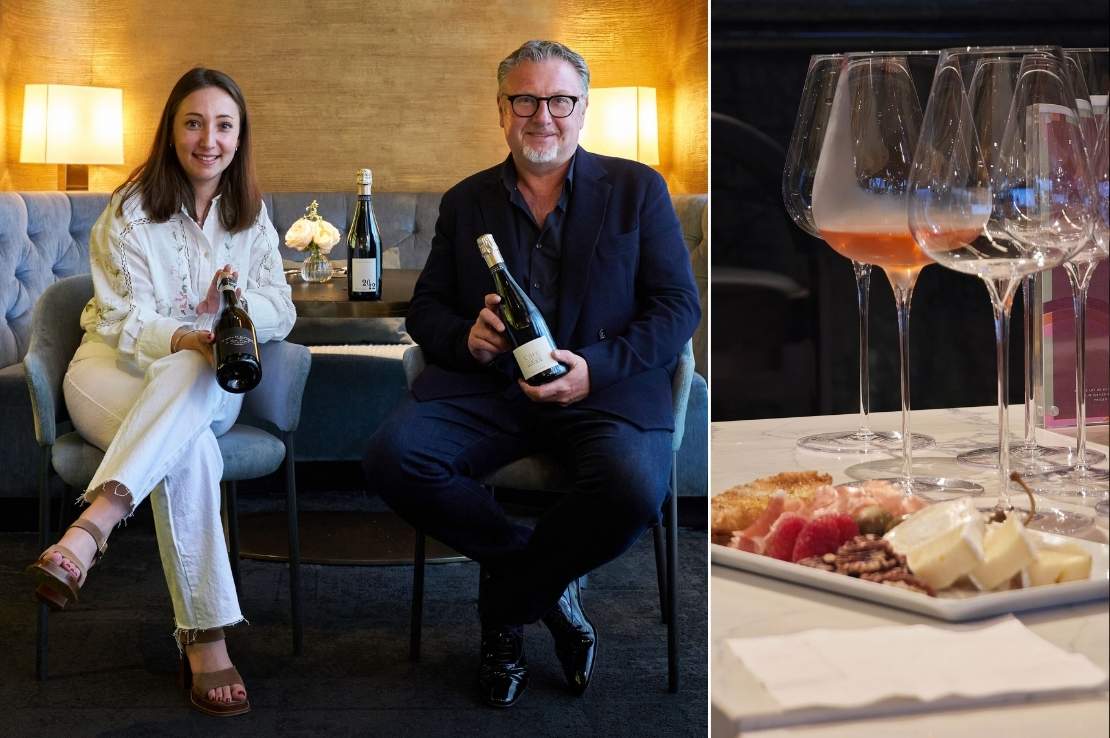
The house’s approach to vintage champagne was demonstrated through six wines presented by cooperative president Damien Champy and commercial director Agathe Bellanger at a masterclass organised by Nova Cellar Selection, independent wine merchant founded by sommelier Novalan Dorasamy in 2017.
How a relationship-led model works
Nova’s business model is fundamentally relationship-led. They get connected from producers, estate owners, and négociants to secure wines, sometimes through tightly controlled allocations when production is limited or global demand exceeds supply, then imports and distributes those wines to on-trade, including hotels, restaurants and wine bars, while also serving private clients and end consumers.
As a merchant that serves as a medium between a small producer and the market, Nova manages access, shipment and quality control, then uses tastings, sommelier relationships and restaurant placements to promote the wines. The wider objective is to build recognition and sustained demand for lesser-known subregions like Côte de Sézanne, considering there are more than 4,000 champagne producers with close to 8,000 registered brands.
Long cellar aging
Le Brun de Neuville produces millésimé, vintage champagne with a minimum aging period of 36 months. Some of their vintages remain on lees for five, ten or even 15 years before disgorgement.
Only one exception in the current releases, the base-2021 Côte Blanche and Côte Rosée were aged for about 29 and 24 months respectively. Bellanger explained that the disruption was caused by an unusually tight sequence during the pandemic, that Champagne’s permitted yields were reduced but demand then rebounded sharply, and the 2021 harvest was diminished by frost and rain. Releasing these two cuvées slightly earlier helped bridge the shortage without forcing the house to rush later wines. From the Les Chemins range onwards, the tasting moved into extended ageing, culminating in an Autolyse cuvée held for 15 years.
Autolyse comes from the word “autolysis”, a process where the lees, yeast cells that died after fermentation in the bottle and became sediment, breaks down and releases compounds into the wine that gives a fuller and brioche-like texture and flavour.
About Côte de Sézanne
The Côte de Sézanne lies south-west of the Côte des Blancs, between Champagne’s better-known northern districts and the Côte des Bar. Chardonnay is at home in both the Côte des Blancs and Côte de Sézanne, yet the latter’s warmer, frequently south- and south-east-facing slopes tend to give it a broader, riper expression. Le Brun de Neuville describes its Chardonnays as generous, bright and pulpy, while the chalk beneath the clay helps retain water and contributes the freshness and saline thread that ran through the tasting.
Le Brun de Neuville: a brand created by a co-op
Le Brun de Neuville began in Bethon in 1963, when a group of local winegrowers pooled their resources as the La Crayère cooperative. The Le Brun de Neuville brand followed a decade later. Today the house draws from vineyards across 12 villages; roughly 90% of its plantings are Chardonnay, supported mainly by Pinot Noir. Rather than owning the vineyards, the cooperative receives grapes from its grower-members (there are about 150+ of them), advises them on viticulture and makes the wines collectively. Its objective is not only to promote and sell their Champagne, but also to act as a standard-bearer for a region that remains less familiar internationally than the Côte des Blancs or Montagne de Reims.
Precision has become increasingly important to that mission. The winery was rebuilt ahead of the 2024 harvest with smaller press fractions that allow parcels, villages, varieties and farming methods to be separated more closely. Stainless steel remains the house’s principal vessel for preserving the region’s fruit and freshness, while selected cuvées explore barrels, indigenous yeasts, partial malolactic fermentation and ageing under natural cork. Sustainable viticulture is encouraged across the membership, including grass cover, ploughing, herbicide-free farming and recognised environmental certification.
The six Champagnes
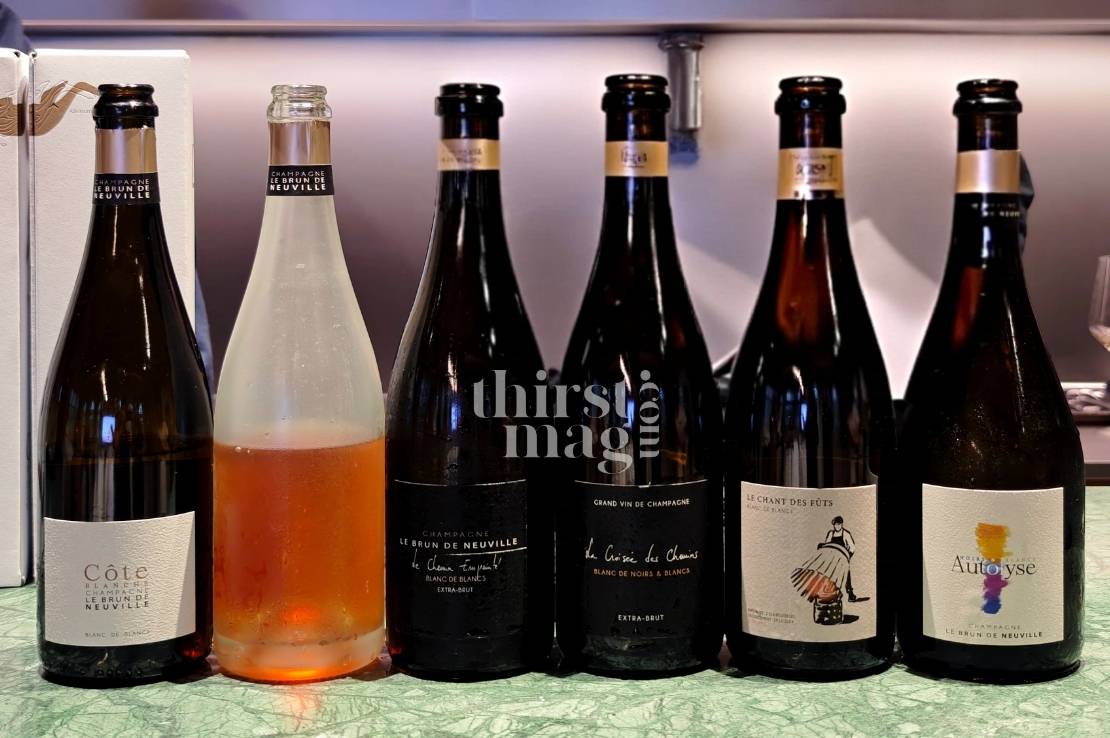
Côte Blanche Blanc de Blancs Brut (12% ABV, aged for 29 months)
The house’s signature introduction to the Côte de Sézanne is made from 100% Chardonnay drawn across the villages with which the cooperative works. The base-2021 blend includes 38% reserve wines and was fermented in stainless steel, with a Brut dosage of 8g/l. Bright and immediately approachable, it opens with white flowers, citrus and ripe orchard fruit. The palate is rounded by the sunnier character of the slopes, but a chalky, lightly saline finish prevents it from becoming broad or heavy. It is an aperitif Champagne by design: generous, clean and easy to return to.
Côte Rosée Brut (12% ABV, aged for 24 months)
Also based on the 2021 harvest, Côte Rosée combines 41% Pinot Noir, 39% Chardonnay and 20% Pinot Noir red wine, with 37% reserve wines and a dosage of 7g/l. Le Brun de Neuville favours blended rosé rather than the saignée method, retaining Chardonnay’s lift while using Pinot Noir for colour, fruit and vinous depth. The nose recalls ripe strawberry and raspberry; at the masterclass, Bellanger compared the notes to strawberry warming in a pan on its way to becoming jam. The fruit is generously supported by refreshing acidity, a soft spice and enough savoury weight to work well with charcuterie.
Le Chemin Empreinté Blanc de Blancs Extra-Brut (12.5% ABV, aged for 63 months)
Les Chemins shifts the emphasis from a broad regional portrait to the imprint of grower and winemaker. Le Chemin Empreinté is 100% Chardonnay from selected, grassed and ploughed plots, built on a 2018 base with 20% reserve wines and 12% barrel-fermented wine. Slow fermentation in tank and barrel is followed by ten months on the lees; malolactic fermentation is incomplete. The wine then spends 63 months ageing under natural cork before manual disgorgement, with an Extra-Brut dosage of 4g/l. The result is deeper and more gastronomic than Côte Blanche: citrus and chalk are joined by toast, pastry and gentle oxidative complexity. Creamy in texture but taut at the finish, it balances ripe Chardonnay with the right amount of salinity.
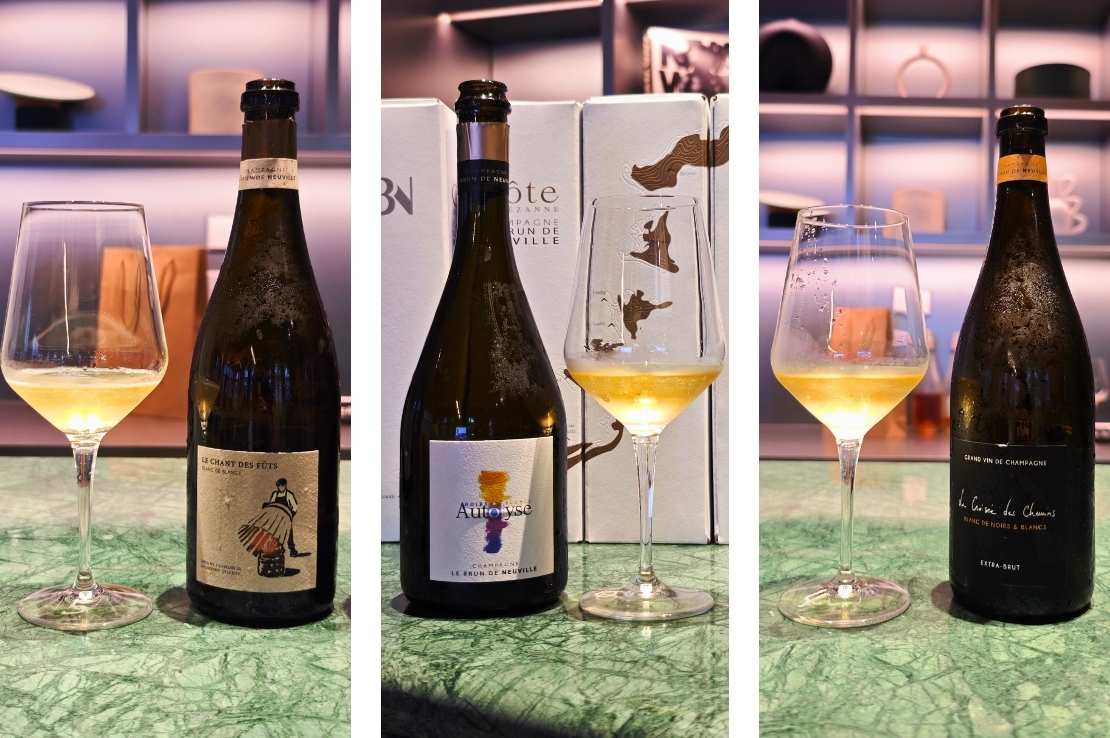
La Croisée des Chemins Blanc de Noirs & Blancs Extra-Brut (12.5% ABV, aged for 70 months)
La Croisée des Chemins (‘the crossroads’) brings the two principal grapes together: 65% Chardonnay and 35% Pinot Noir. Its 2017 base includes 36% reserve wines, including a small contribution from a perpetual reserve begun in 2009, plus 7.4% barrel-fermented wine. After slow fermentation and ten months on the lees in tank and barrel, it aged for 70 months under cork and was disgorged by hand; dosage is 6g/l. More vinous and forceful on the nose, it shows ripe fruit, cream, mushroom and warm spice, with an occasional suggestion of curry. Pinot Noir brings breadth and length, while Chardonnay keeps the wine bright. This is a table Champagne, suited to dishes with umami, spice or earthy flavours.
Le Chant des Fûts Blanc de Blancs Extra-Brut, Édition No. 2 (12.5% ABV, aged for approximately 42 months)
Le Chant des Fûts (‘the song of the barrels’) is a limited study of the generous 2019 harvest. Made entirely from Chardonnay with no reserve wine, it fermented with indigenous yeasts and matured for 19 months in a mix of 205-, 228- and 400-litre barrels and demi-muids. It then aged for roughly three and a half years under cork before manual disgorgement on 29 October 2024. Dosage is 5.4g/l and production was limited to 2,514 bottles. Oak is central but not merely cosmetic: the wine is broad, layered and pastry-like, with ripe yellow fruit, cream, toast and sweet spice held in check by the vintage’s retained acidity. It is the richest Chardonnay expression in the line-up, but it finishes with the freshness needed for food.
Autolyse Noirs & Blancs Brut, base 2009 (12% ABV, aged for 180 months)
The final wine places time ahead of oak. Autolyse Noirs & Blancs is led by 66% Pinot Noir with 34% Chardonnay, including 15% reserve wines from 2008. Fermented in stainless steel and bottled in May 2010, it remained on its lees for 15 years before disgorgement in 2025. Its 6g/l dosage is labelled Brut. Extended contact with spent yeast brings the expected brioche, pastry and savoury complexity, yet surprisingly composed. Golden in colour, it moves through dried orchard fruit, nuts, yeast and mature cheese-rind notes, with Pinot Noir supplying breadth. A persistent saltiness and clean acidity keep the finish alive. It is a contemplative Champagne, one for slow drinking, aged Comté or Parmesan rather than for a quick toast.
- T -