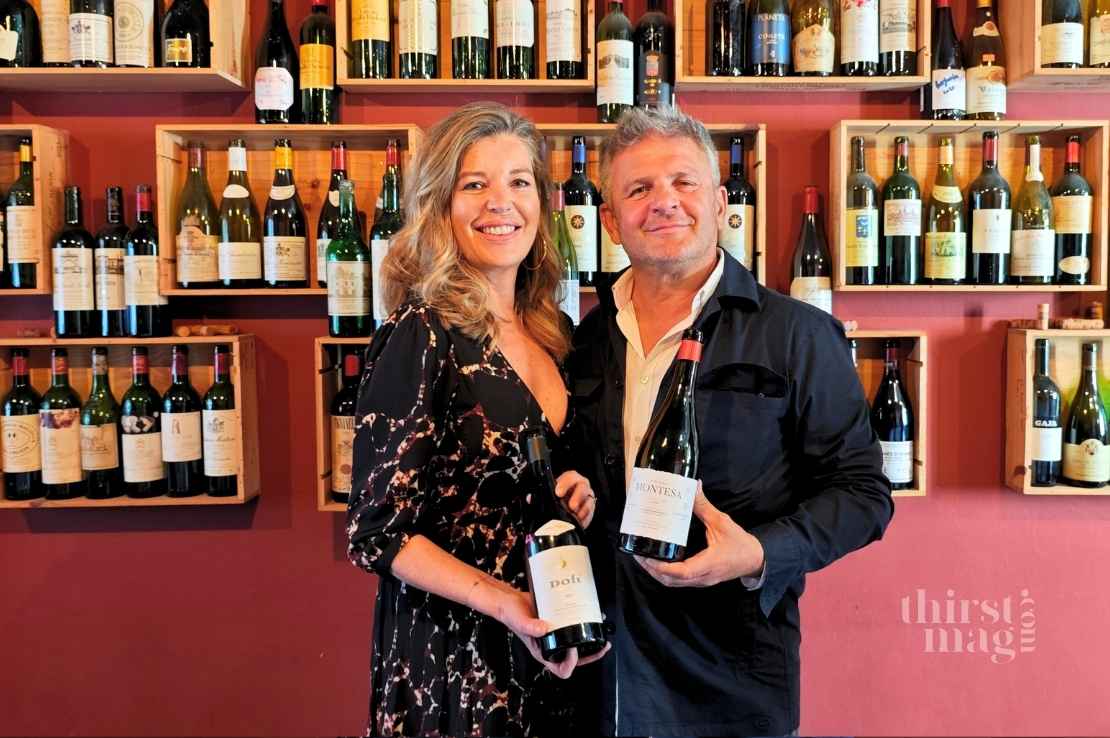
Type “Álvaro Palacios” into a search engine and you will not find an official website or an active social media presence. Instead, the results lead you to articles on media and distributor pages.
For someone often described as one of the most important winemakers in modern Spain, the absence feels intentional. Who is this influential figure, unknown to the casual drinker, yet regarded within the wine world as one of the key architects behind the revival of Spanish Garnacha?
In the late 1980s and early 1990s, global wine trends were shifting. Influenced heavily by critics such as Robert Parker, markets began favouring deeply coloured, powerful wines. In Rioja, this translated into a widespread move towards Tempranillo, a variety that could reliably deliver colour and structure.
Garnacha was considered inconsistent by contrast. Its lighter colour and sensitivity to vintage variation made it less commercially attractive. Across Rioja Oriental, old Garnacha vines were uprooted and replaced by more commercially viable varietals.
Álvaro was part of a small group often referred to as the “Priorat Five”, who chose a different direction. Rather than following market demand, they turned towards neglected vineyards and historic varieties.
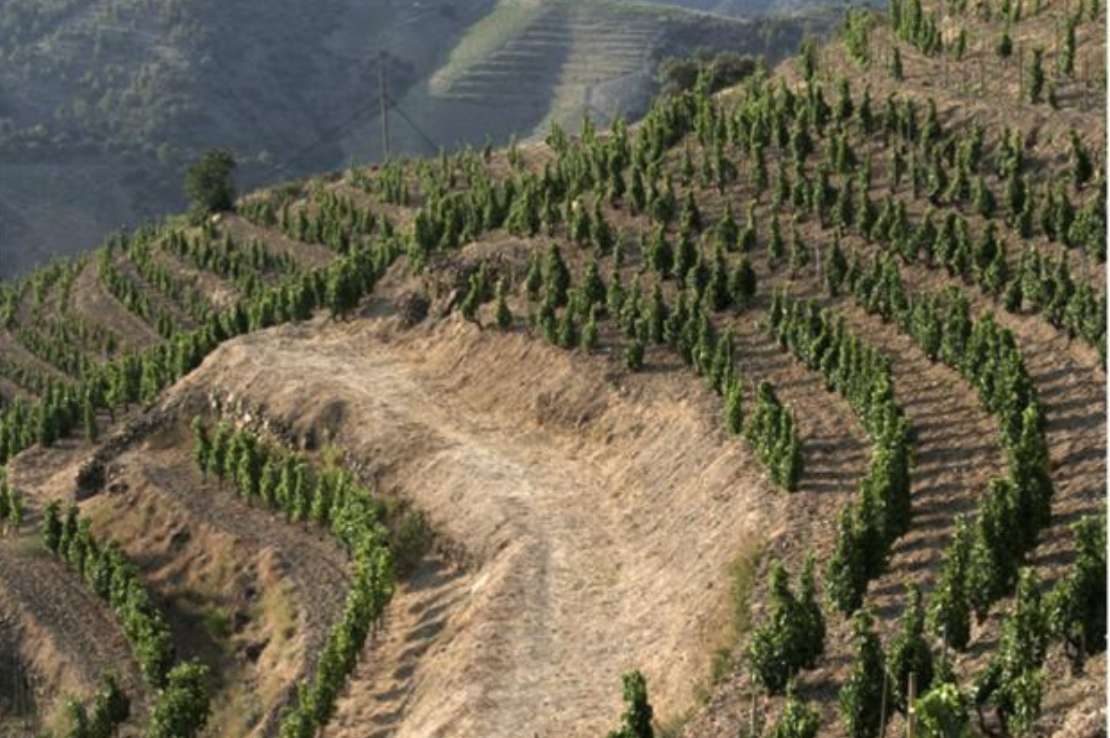
The steep terrace vineyards that is challenging for farming and harvesting wines in Priorat region, Spain. [Image source: Álvaro Palacios]
In 1989, Álvaro arrived in Priorat, a region that had largely been abandoned. What he saw were steep, terraced vineyards planted decades, sometimes centuries or earlier, which were left to decline due to the difficulty of farming them. Where others saw hardship, Álvaro saw opportunities.
His cult wine, L’Ermita, first produced in 1993, would later become one of Spain’s most sought-after wines. A Garnacha-led single-vineyard expression (92% Garnacha, 7% Cariñena, 1% whites), it demonstrated that Spanish wines, particularly those based on Garnacha, could rival the depth, complexity and ageing potential of the world’s great wines. But Priorat was only one part of the story.
Álvaro’s roots are in Rioja Oriental, where his family winery was established. His father began making wine in the 1970s, initially buying grapes rather than cultivating vineyards. After studying in Bordeaux and working with the Moueix family, Álvaro returned to Spain with a renewed perspective on terroir-driven winemaking.
Rather than continuing along the path of large-scale production, he shifted focus back to vineyards, particularly focusing on Garnacha grown around Mount Yerga area. This marked the beginning of a long-term effort to restore the identity of Rioja Oriental as a Garnacha region.
Today, Álvaro applies his winemaking philosophy consistently across all three vineyards: Rioja Oriental (Mount Yerga) - his family base, focused on Garnacha grown on limestone-rich soils, Bierzo (Corullón) - historic bush Mencía vines, some over 90-100 years old, preserved and reinterpreted, and Priorat (Gratallops) - steep, schist-based vineyards that define his most iconic wines.
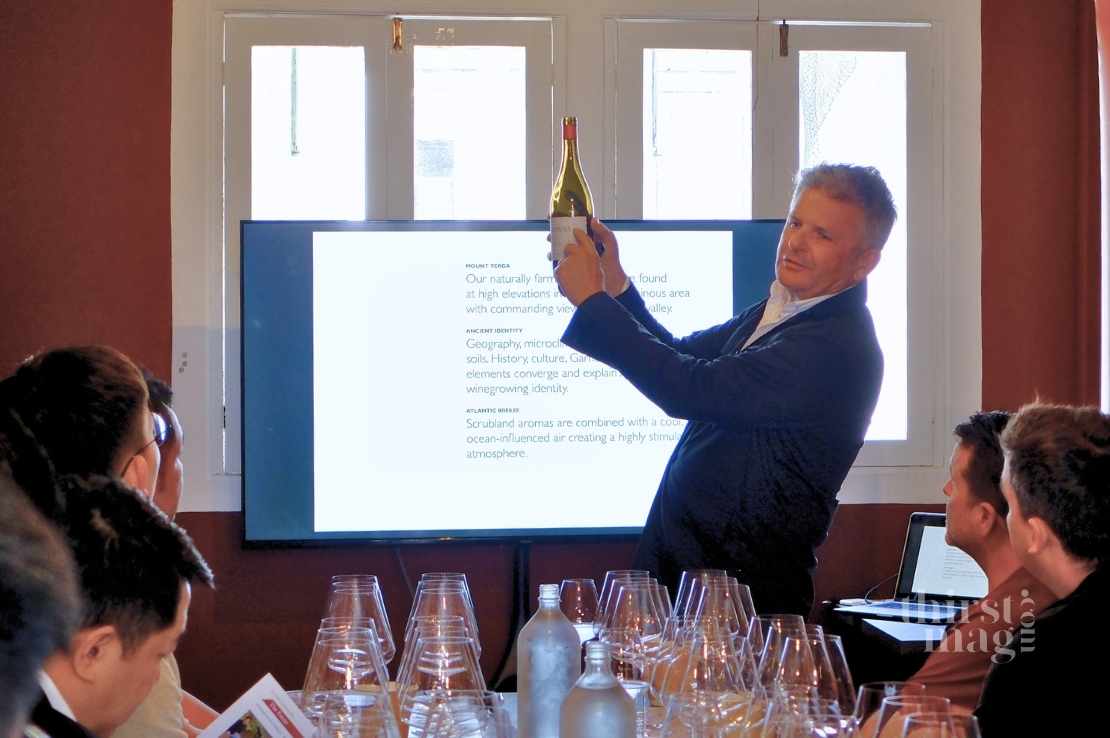
During the masterclass at Praelum Singapore, Álvaro Palacios explained the history, landscape and the revival of Spain's ancient vineyards with Garnacha varietal. [Photo: Kim Choong]
A Philosophy of Place (Soil)
Álvaro does not speak in terms of grape varieties, but in terms of place. “I don’t drink varieties,” he says during the masterclass. “I drink places.”
For him, the vineyard is not simply a site of production, but a living system shaped over centuries. The role of the winemaker is not to impose style, but to reveal what already exists. With this in mind, he practices organic viticulture, natural yeast fermentation, minimal intervention in the cellar and precision in vineyard work. The type of soils in particular, are central to his thinking.
In Rioja Oriental, the presence of calcium carbonate and limestone gives Garnacha a lifted freshness and fine structure. In Bierzo, mixed hillside and valley soils shape Mencía into a more delicate, fragrant style with softer structure and subtle mineral clarity. In Priorat, the schist (llicorella), a poor, fractured, and mineral-rich soil forces vines to struggle, which in turn produces wines with intensity and depth.
“Each soil gives a different emotion,” he explains, and describes vineyards as highly sensitive ecosystems, capable of reflecting not only climate and soil, but also the intent of those who work them.
Priorat and the Return to Origin
In Priorat, vineyards sit on steep terraces reaching up to 700 metres above sea level. Farming here is physically demanding. Machinery is limited, and much of the work is still done manually or with the assistance of mules due to the steep terrain.
The region’s defining soil, llicorella, is a metamorphic schist formed under intense geological pressure. Unlike limestone soils, it contains little organic material. The result is wines that lean towards mineral, iron-tinged, and savoury profiles.
In 2009, Priorat’s “Vi de Vila” (village wine) classification was formalised. It reinforces the importance of origin and site specificity and Álvaro’s Gratallops bottling becomes the benchmark of this philosophy in practice.
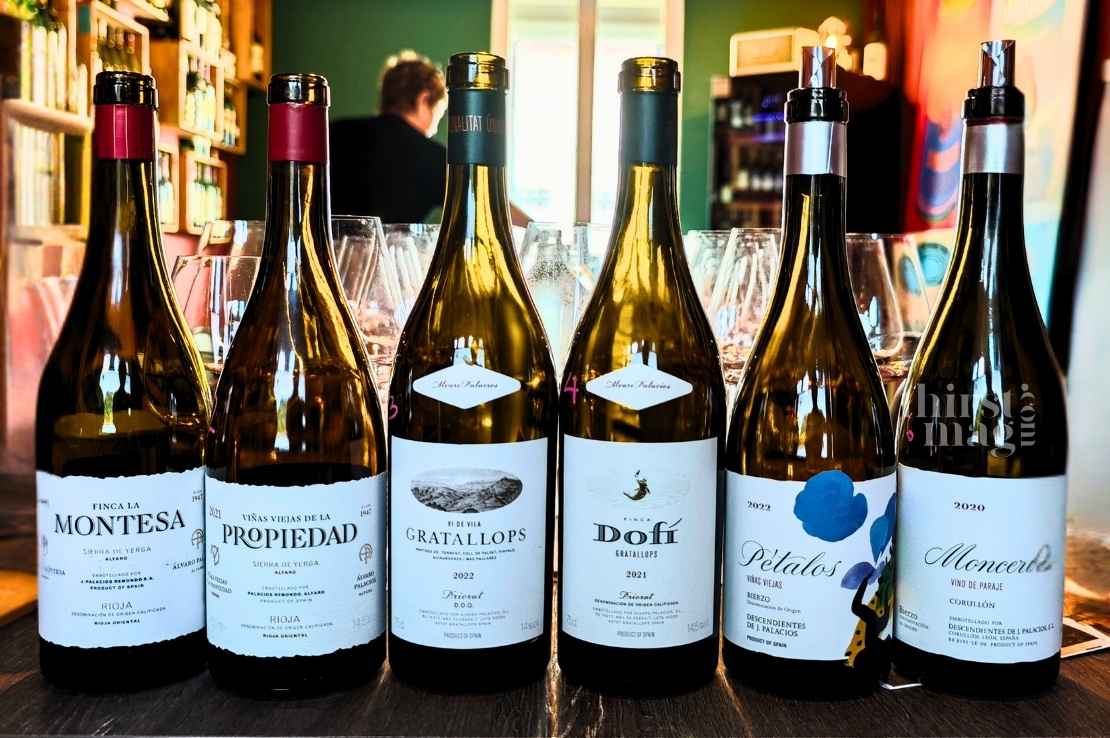
Tasting the Garnacha wines from Rioja, Bierzo and Priorat. [Photo: Kim Choong]
Tasting the Wines
The masterclass moved across Palacios’ three core terroirs that illustrate the winemaker’s intentions and through the soils. Tasting notes were extracted from the masterclass.
1. Finca La Montesa Sierra de Yerga (Rioja)
The entry point into Palacios’ Rioja work, La Montesa is produced from organically farmed vineyards on Mount Yerga. This is the continuation of his father’s work, reinterpreted through Álvaro’s Garnacha lens. He describes it as a wine of typicity, an honest expression of Rioja Oriental.
Grape composition: Predominantly Garnacha
Soil: Clay, sand, silt with limestone (calcium carbonate)
Altitude: ~550 metres
Production: ~550,000 bottles annually
Ageing: 9–12 months in French (85%) and American oak
Tasting notes: Bright and lifted, with red cherry, raspberry and wild strawberry. There is a subtle citrus edge, orange peel and blood orange, carried by a fine, linear acidity. The texture is light, almost delicate, with a clean, savoury finish.
2. Vinas Vejas De La Propiedad Sierra de Yerga (Rioja)
Produced only in strong vintages, this wine comes from old bush vines aged 90–105 years. These vineyards were planted historically as mixed plots to balance vintage variation. Álvaro has continued this tradition, recognising its natural adaptability.
Grape composition: 80% Garnacha with field-blend varieties (Bobal, Monastrell, Garnacha Roya, white grapes)
Vinification: Fermented in wooden vats and aged in large-format oak (foudres, ovals)
Tasting notes:
Deeper and more layered than La Montesa. Red fruits dominate (cranberry, raspberry, sour cherry) alongside floral and citrus lift. The hallmark here is a tension between ripeness and freshness, with a persistent, almost tactile acidity.
3. Vi De Vila Gratallops (Priorat D.O.Q.)
A village wine representing the terroir of Gratallops. This wine reflects Álvaro’s push towards terroir classification. Rather than branding, the label highlights the place instead.
Blend: 74% Garnacha, 24% Cariñena, small percentage white varieties
Soil: Schist (llicorella)
Altitude: up to ~700 metres
Tasting notes:
More structured and mineral. Aromas lean towards darker red fruits, dried herbs, and a distinct iron-like minerality. On the palate, the wine shows tension such as citrus peel, orange zest and a salinity balanced by refined tannins.
4. Finca Dofí Gratallops (Priorat)
A single-vineyard expression and one of Álvaro’s flagship wines. Dofí in Catalan, meaning “dolphin”, pays homage to René Barbier, a close friend and mentor who first brought Álvaro to Priorat and introduced him to the region’s potential. It is an estate-level wine above village classification.
Blend: Predominantly Garnacha, small proportion of Cariñena, minimal white varieties
Soil: Schist (llicorella), metamorphic, mineral-rich, poor in organic matte
Altitude: 300–400 metres above sea level
Ageing: French oak for over a year
Tasting notes: Red cherry, wild strawberry and orange peel, with a structured, refined palate, and a long, mineral finish.
Made in Descendientes de J. Palacio (Bierzo) co-owned by Álvaro and his nephew, Ricardo Perez Palacios, and named after Álvaro's father who passed away in 2000. These two contrasting expressions of Mencía are regional blends from old vines aged up to 120 years that combine fruits from hillside and valley vineyards.
5. Pétalos Vinas Viejas (Bierzo)
A regional blend and gateway wine bringing together landscapes, soils and villages.
Grapes: Predominantly Mencía, 2-12% of local white varieties
Soil: Corullón
Altitude: 450–800 metres
Tasting notes: Dark berries, creamy mouthfeel, and accessible, with fragrance of Mencia.
6. Moncerbal Vino De Paraje (Corullon)
A single-vineyard wine from the hills of Corullón.
Grapes: Mencia and small percentage whites
Soil: Dolomite, quartz and marble
Altitude: 700-850 metres
Ageing: Natural fermentation, aged in oak
Tasting notes: Red berries, floral with subtle minerality, fresh tannins and acidity, clean and elegant
The wines featured in this masterclass are available in Singapore through eWineAsia.
- T -