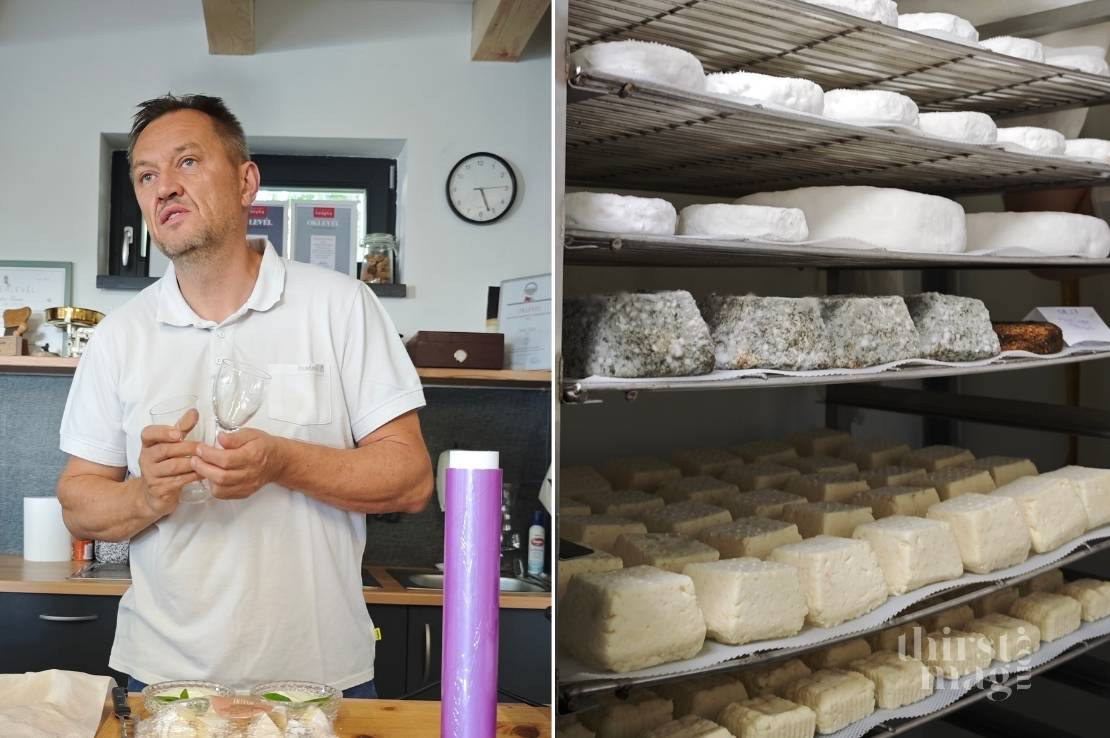
The cheesemaker apologises for looking tired. Sándor Tamás has slept only four hours. He had spent the night preparing cheeses for the upcoming Hungarian Rural Culinary Event, known locally as SVÉT (Stílusos Vidéki Éttermiség), taking place that weekend.
“Cheeses are not ready on their own. They need turning, washing, checking, and turning again,” Tamás said.
We were in northern Hungary, in the small village of Mónosbél at the foot of the Bélkő mountain range. Driving through the countryside, our van passed a rocky patch with a narrow walkway leading to the door of Bükki Sajtmanufaktúra – Hegyvidéki Sajtok, the home where every wheel of Tamás’ cheese is made.
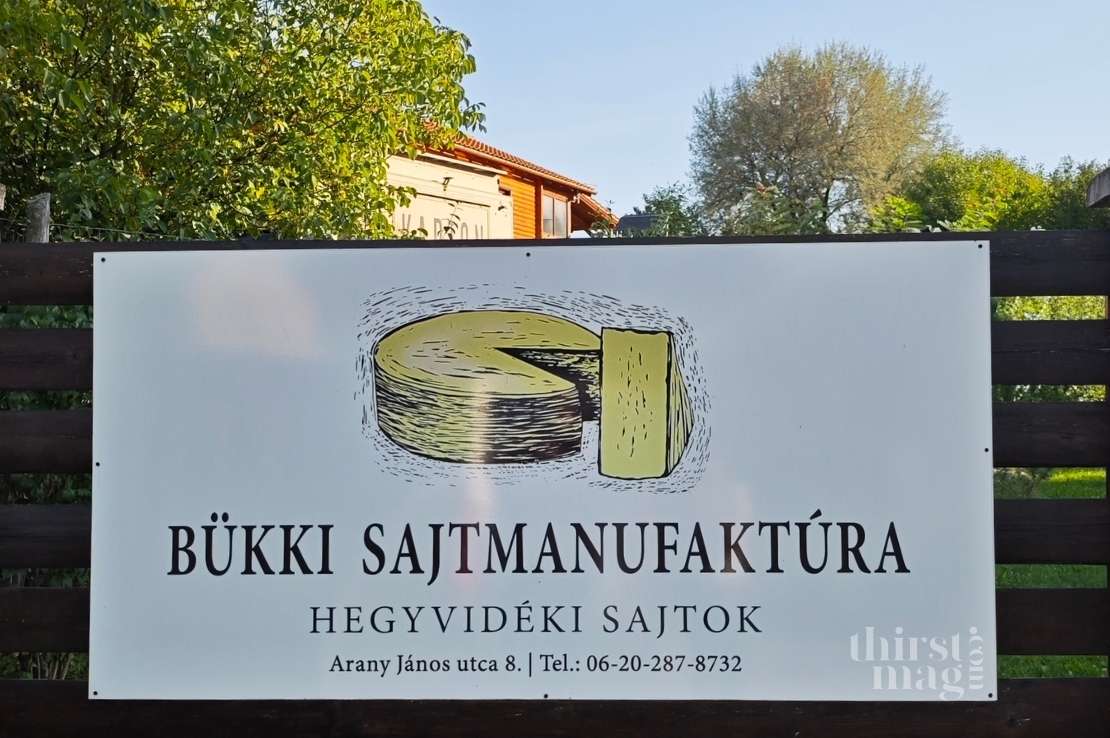
Entering the cheese factory in Mónosbél. [Photo: Kim Choong]
Inside the shop, a long table was laid out with glassware and cutlery, resembling a small restaurant more than a farm dairy. Display cabinets were neatly lined with cheeses, yoghurt, milk, crackers and cream. Behind them sat a kitchen equipped more like a restaurant than a deli. Later we would discover why: Tamás was once a pastry chef, and dessert is still very much part of his craft.
After a quick welcome, a tour of the production space began. Hair nets and shoe covers were handed out, hands were washed, and we were led into the back rooms.
Ten rooms. Each kept at a different temperature. Built as a cellar carved into stone, humidity here is regulated not just by machines but by the walls themselves. If the air grows too dry, the stone is watered so the cheeses do not crack. Everything in the facility is designed with function in mind, within the constraints of a small space.
The rooms are tight, but Tamás’ ideas are expansive.
He dreams of building an observatory on the roof, where children can watch the stars after learning how cheese is made. Inside the dairy, he imagines projecting cartoons explaining fermentation to young visitors. One day, he hopes the dairy will become part of an agrotourism destination where families come to learn about cheese. Cheese, he insists, should not belong only to adults.
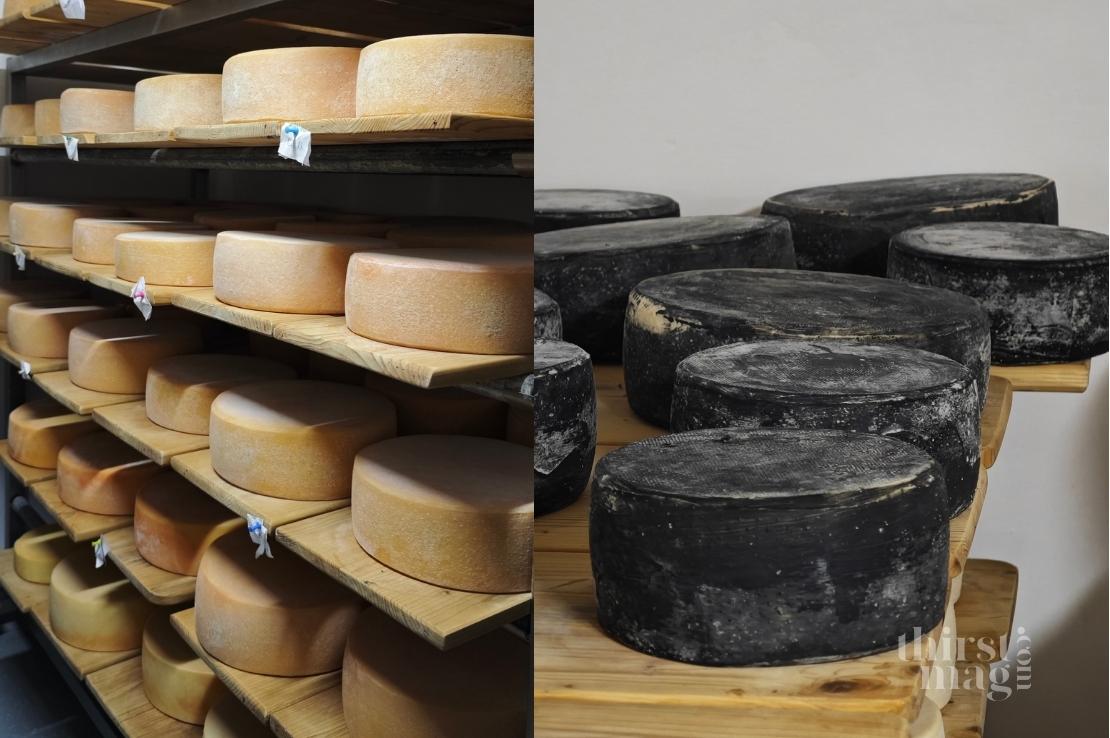
The milk in the Bukk Mountains is suitable for hard and semi-hard cheese. They are aged between 3-12 months with the hope that production can be doubled in the near future for longer aged cheeses. [Photo: Kim Choong]
A Boutique Dairy, Not a Factory
Despite the name “Sajtmanufaktúra” (cheese manufactory), Bükki Cheese is far from an industrial facility. It is a boutique operation producing small batches.
Yet Tamás’ cheeses appear in some of Hungary’s top kitchens. They can be found in five-star hotels and fine dining restaurants, including Macok Bistro in Eger, a Bib Gourmand restaurant where we first encountered Tamás' cream ans cheeses during a wine pairing lunch at St. Andrea.
Later we visited Macok ourselves and saw the cooking school next door. It was clear that Tamás’ cheeses had found their way into Hungary’s serious culinary circles.
Learning by Leaving, and Returning
Tamás’ fascination with cheese began twenty-five years ago when he was still working as a pastry chef. For more than a decade he travelled repeatedly to Austria, Italy and Switzerland three or four times a year, studying cheesemaking wherever he could. Not just techniques, but cultures, markets and mountain traditions.
He tasted butter made at different altitudes, observed how Alpine producers think not in scale but in limits, and chased knowledge with the persistence of obsession. Eventually he returned to Hungary determined to build something similar at home.
Building Bükki Cheese
Twenty years ago, Tamás founded Bükki Cheese. In the beginning he worked with just 50 litres of milk a week. Today production has grown to around 2,000 litres, though he hopes to double that one day, but only if expansion does not compromise quality. Milk, after all, is always the constraint.
His time in the Alpine regions shaped the style of cheese he produces today. He learned that in Switzerland, even ten times his current production would still classify him as a small producer.
That perspective stayed with him. He often speaks about “regionality”, not as a marketing buzzword but as resistance to dilution. When production grows too large, he says, cheese becomes consistent and forgettable.
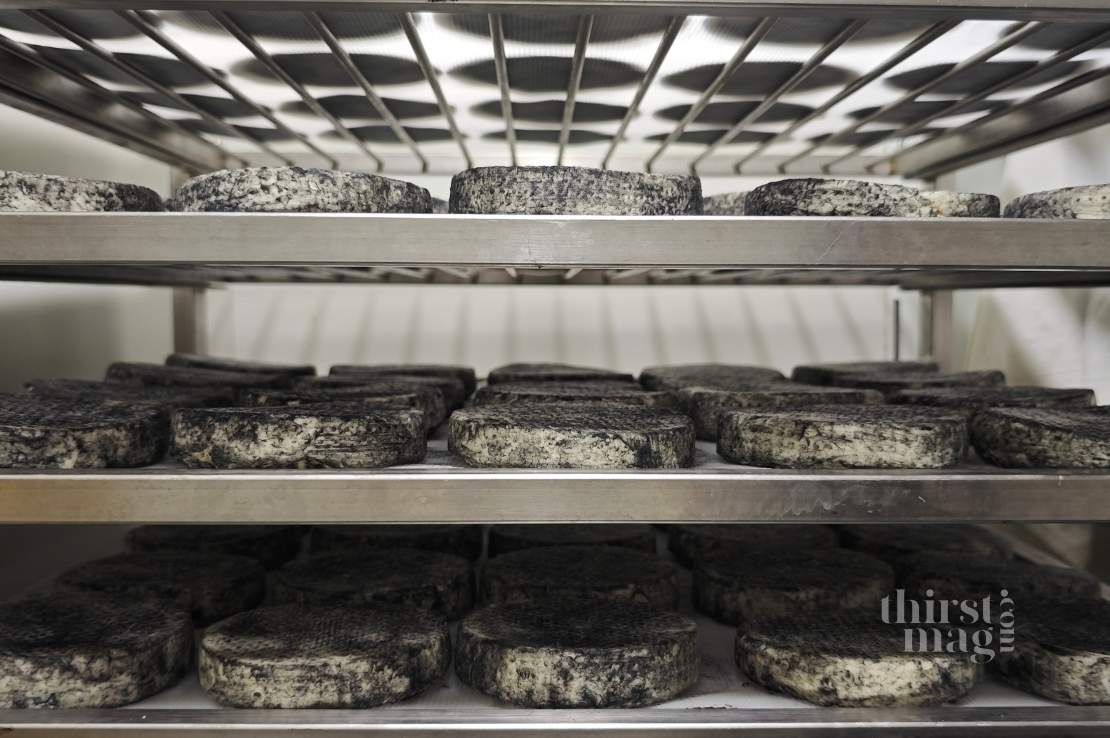
Ash-rind cheese coated with ash (carbon), visually resembling stone. A similar style to Camembert but with a more mineral flavour rather than mushroom notes. Could this be the cheese that become geographically signatory to Bükk Mountains? [Photo: Kim Choong]
The Pasture, Milk and Flavour
For Tamás, milk must be local. The cows graze on pastures across northern Hungary where grasses grow between jagged limestone slabs. Herbs push through rocky soil, absorbing minerals from the terrain. The region’s karst geology produces mineral-rich spring water that flows through the landscape.
Animals drink that water. The grass absorbs it. The milk carries it. Taste carefully, Tamás believes, and you will find it again in the cheese: a faint bitterness, a savoury edge, something stony beneath the cream. He is even working with a university near Budapest to test the theory scientifically.
The core cheeses produced here are mountain-style hard cheeses aged 6 to 12 months, along with semi-hard cheeses aged about three months, and small batches of goat and sheep milk cheeses. Nothing goes to waste. Milk also becomes yoghurt, fresh butter, truffle butter and cream cheese. Whey from the cheesemaking process is used to produce orda, a Hungarian whey cheese similar to ricotta.
Tamás once tried raising goats himself, but disease wiped out the herd. Today he sources milk from farms around the Bükk region. “Let people do what they are best at,” he says. “So I focus on cheese.”
The Story of Land and People
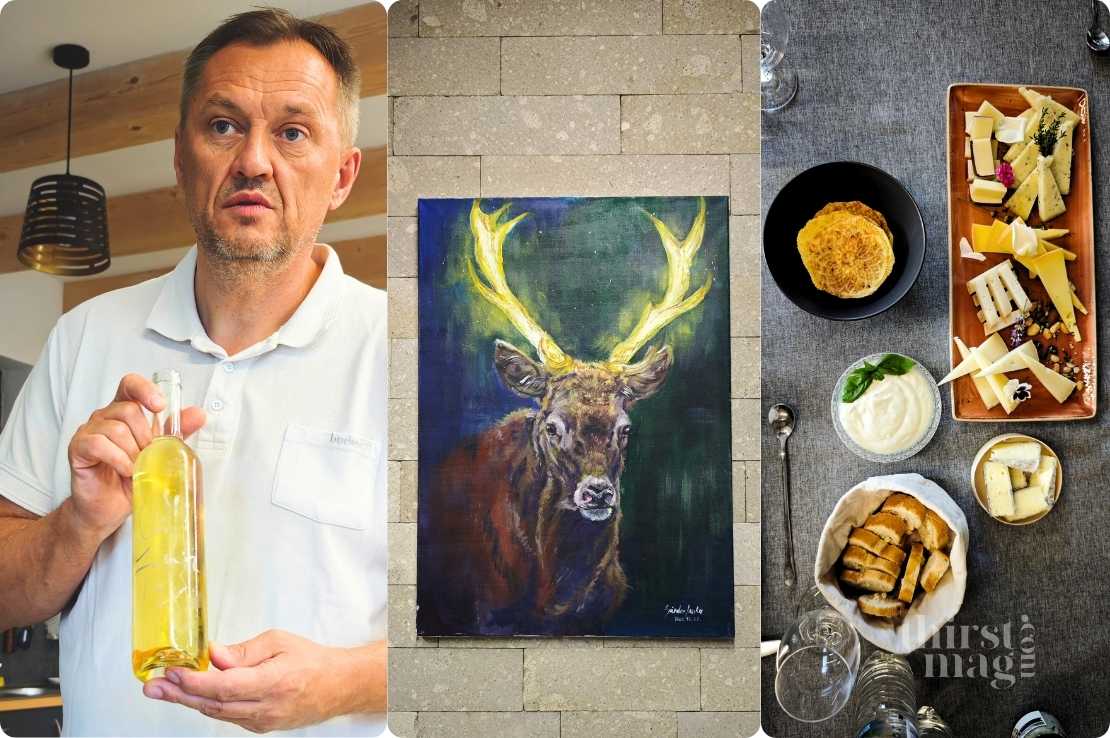
From left: Sandor Tamás holding a bottle of sparkling wine from Scharioth Birtok; the mysthical stag from an ancient Hungarian legend; cheese platter as part of the tasting experience in Bükki Cheese Factory. [Photo: Kim Choong]
At one point during the tasting, Tamás began telling the ancient Hungarian legend of Hunor and Magor, sons of the hunter-king Nimród.
During a hunt they chased a miraculous deer, the csodaszarvas, across distant lands until it vanished near the Sea of Azov. There they settled. Hunor’s descendants became the Huns; Magor’s descendants became the Magyars, the Hungarian people.
Eventually those people migrated west into the Carpathian Basin, where fertile plains supported horse culture, livestock and agriculture. For Tamás, the story is more than folklore. It speaks to the relationship between land, animals and food, a connection he hopes his cheeses will continue.
It became clear that Tamas has set himself to be the custodian of Hungarian dairy tradition through his cheese. The connection between the taste of Hungary with the world.
Experimentation Never Stops
Back at the tasting table, Tamás opened a bottle of sparkling wine from Scharioth Birtok, a small winery in the nearby Mátra region run by a friend.
“Sparkling wine cleans the palate,” he said. “It prepares it for the next flavour.”
Experimentation is constant in his dairy. He’s been using unique Hungarian herbs and spices that speaks about the lands in the curds. He has tested cheeses aged with coffee powder, truffle and pine, paprika, thyme, and smoked in beech wood (abundance in the nearby mountain).
One is aged in charcoal-fired tuff cellar and ash-coated. It resembles dark stones and aims to express mineral notes rather than the mushroom profile typical of Camembert. This could be, perhaps that one uniquely Bükk Mountains cheese that Tamás has been searching for.
A student once brought him buffalo milk. Naturally, Tamás turned it into cheese. “Not every experiment works”, says Tamás, but every attempt teaches him something.
Regionality as Resistance
Tamás sees regional identity as the future of cheese. At Bükki Cheese, nearly everything is local: milk, herbs, wine sediments used in ageing, and even the whey used to make orda. The goal is not simply to produce cheese but to express the landscape it comes from.
Some of his cheeses are already heading to international competitions. The Bükki hegyvideki tehensajt 6 months won Gold in the World Cheese Awards 2025-26 in Bern, Switzerland. Yet Tamás seems less interested in awards than in something simpler.
Does the cheese still taste like where it came from?
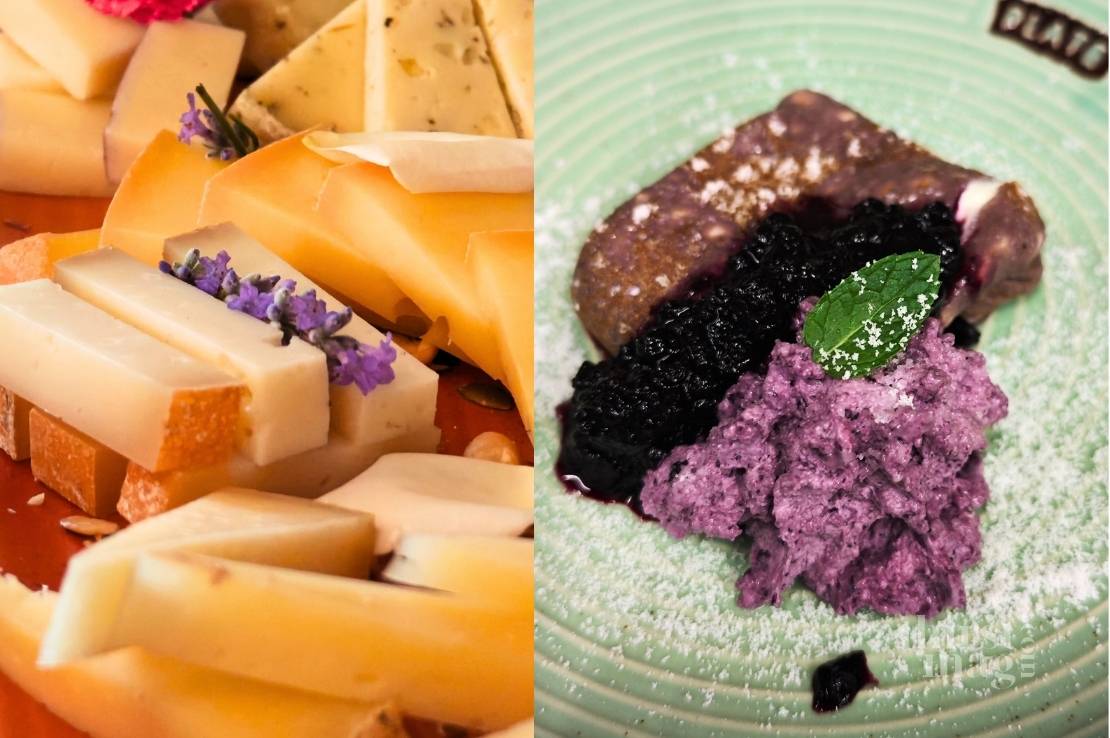
From left: Cut cheese from the Bukki Cheese Factory; dessert of the day on the menu, the past of the cheesemaker as a pastry chef quietly resurfacing his craft. [Photo: Kim Choong]
Why Hungarian Cheese Is Rare
The question inevitably arises: why is Hungarian cheese not widely known internationally?
The answer is simple: Cheese requires milk and time.
Ageing cheese for two or three years ties up capital and space. Only a handful of producers in Hungary can afford to do it. Tamás hopes that with more milk supply he can eventually produce cheeses aged 18, 24 or even 36 months. But that will take patience.
Feeling optimistic, Tamás shared that he has potential investors who are interested to help with expanding cows supply, manpower in managing the cow farms and cheese making, as well as space.
A Man Who Refuses to Stop
By late evening, the plates were empty and the sparkling wine nearly gone. Tamás moved between kitchen, cellar and table with tireless energy, despite his obvious fatigue. We were already late for our next appointment, yet none of us seemed ready to leave.
Then dessert arrived. A simple ricotta-style orda cream layered with lemon, honey and berries. The pastry chef in Tamás briefly resurfacing. We were spoilt by his gentle hospitality and the candid reflections of a cheesemaker driven by a mission much larger than himself.
Though Bükki Cheese has officially existed for twenty years, Tamás insists that the project is still unfinished. The man is now part cheesemaker, part chef, and part custodian of Hungarian dairy tradition.
Perhaps it always will be.
Find Bükki Sajtmanufaktúra (Tamás Sándor Cheese Factory) at 345 Mónosbél, Arany János Street 8, Hungary. +36 20287 8732 / +36 20585 4464. hegyvidekisajt@gmail.com
- T -